
If you're counting total applicants as your primary success metric, you're tracking what I call a vanity metric. It feels good. It looks impressive in board meetings. But it doesn't tell you anything about whether you're actually solving your staffing problem.
The metric that matters? Your apply-to-hire conversion rate.
The Philadelphia Wake-Up Call
A Philadelphia Police Captain learned this lesson the hard way. His department invested heavily in recruitment marketing and generated over four million marketing impressions. Four million. That's the kind of number that looks great in a quarterly report.
Applications didn't just stagnate. They actually declined.
The problem wasn't visibility. The problem was conversion. The department was casting the widest possible net but catching nothing. Once they shifted focus from maximizing impressions to identifying and engaging the right candidates at every stage of the funnel, they didn't just meet their hiring goals. They exceeded them.
This isn't an isolated case. It's a symptom of how most agencies have been approaching the police recruiting crisis for the past five years.

Why Total Applicants Is a Vanity Metric
Let's say your agency received 200 applications last year. Sounds decent, right?
But how many of those 200 actually made it through backgrounds? How many accepted offers? How many showed up to the academy?
If you hired five officers from those 200 applications, your apply-to-hire rate is 2.5%. That's not a recruiting problem. That's a conversion crisis.
Here's the uncomfortable reality: recruiting success is measured by how many sworn officers you put on the street, not how many people clicked on your job posting.
Total applicants can be artificially inflated by:
- Unqualified candidates who apply on a whim
- Applicants who have no intention of completing the process
- People shopping multiple agencies with zero commitment
- Candidates who drop out at the first friction point
None of those help you fill your patrol shifts.
The Real Metric: Apply-to-Hire Conversion Rate
Your apply-to-hire rate answers the only question that matters: How many people do I need at the top of my funnel to get one qualified hire at the bottom?
This metric forces you to examine two critical conversion points:
1. Interest to Application How many people who express interest in your agency actually complete an application? If you're losing 80% of interested candidates before they even apply, you have a friction problem at the front door.
2. Application to Hire Of those who apply, how many make it through backgrounds, interviews, medical, psych, and ultimately accept an offer? If you're losing 95% of applicants somewhere in this pipeline, your process is broken.
Industry data shows that high-performing agencies achieve apply-to-hire rates between 5% and 15% depending on their hiring standards and process efficiency. If you're below 5%, you're hemorrhaging candidates at multiple points in your funnel.

The 2026 Reality: Conversion Is Everything
The good news? Data from 2024 shows agencies are starting to turn the corner. Departments hired 5% more officers in 2024 than 2023 and 12.5% more than 2019. But this improvement isn't coming from casting wider nets. It's coming from smarter conversion strategies.
Here's what's working in 2026:
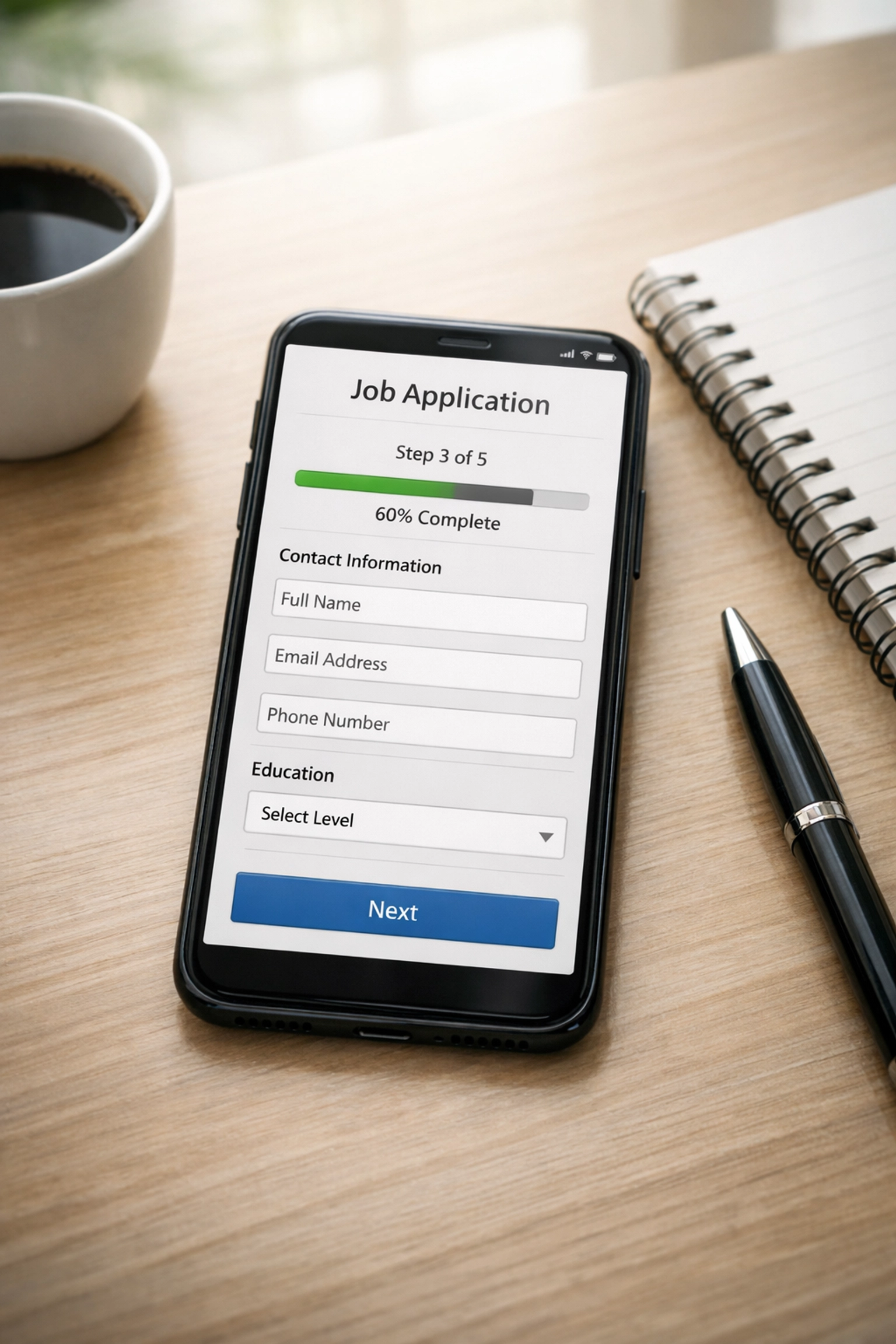
Removing Friction from the Application Process One Alabama agency saw immediate application increases after replacing an in-person requirement with a mobile-friendly online form. The job didn't change. The standards didn't change. But suddenly candidates who worked irregular hours or lived two hours away could actually apply.
Your application process should take 10 minutes, not 45. If candidates need to create an account, download PDFs, or mail documents, you're losing people.
Accelerating the Timeline Your top candidates are being recruited by multiple agencies. The department that moves fastest wins. Period.
Agencies with hiring timelines longer than 90 days routinely lose their best applicants to competitors who can move in 60 or fewer. This isn't about cutting corners on backgrounds or lowering standards. It's about eliminating bureaucratic delays, streamlining interviews, and treating candidates like the high-value prospects they are.
Targeted Community Engagement Mass marketing doesn't work anymore. Agencies that have improved their conversion rates are the ones doing direct, relationship-based outreach to local communities. This approach has proven particularly effective for recruiting women and minority candidates, two demographics that many agencies struggle to reach through traditional advertising.
Building Your Conversion Funnel Model
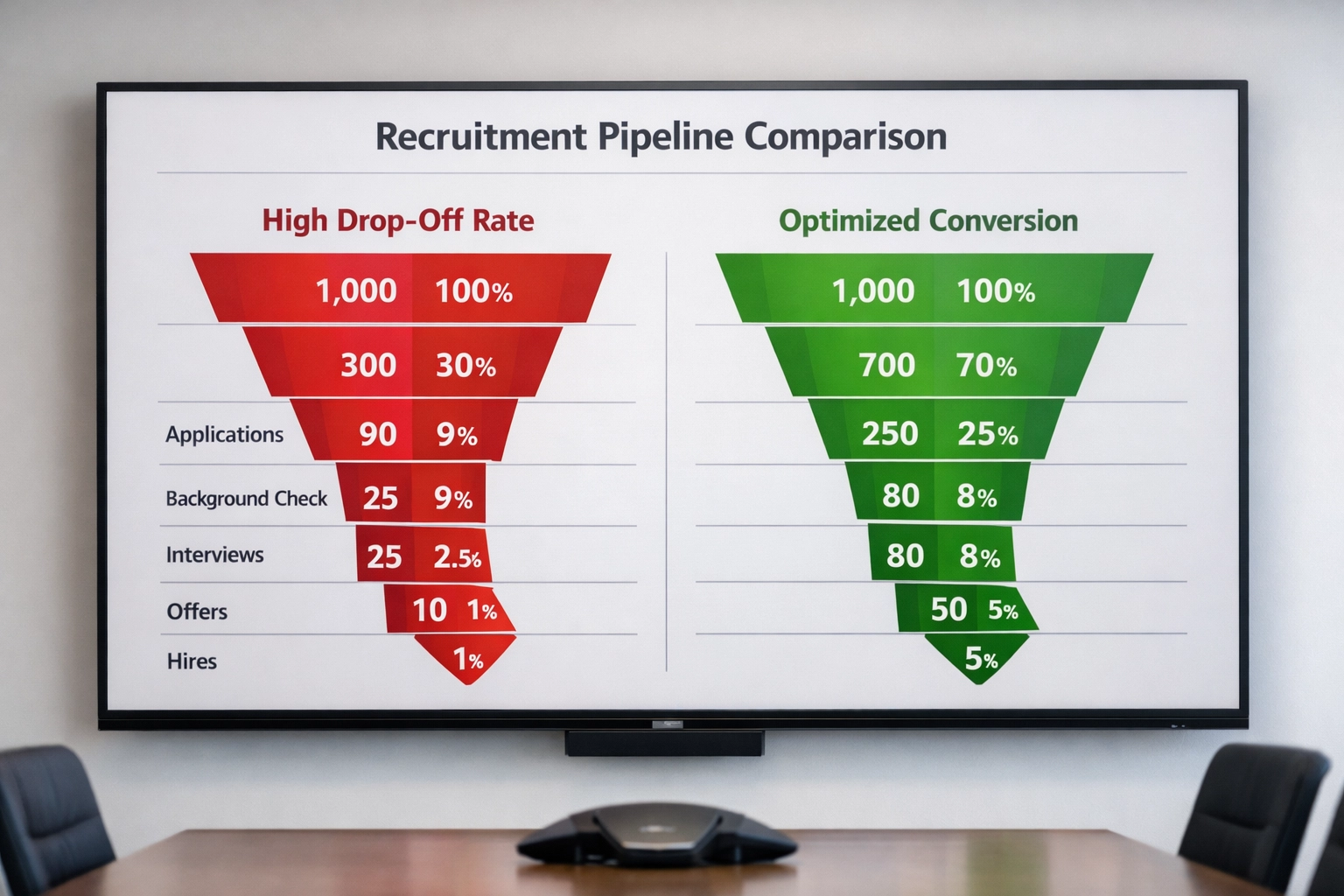
To fix your apply-to-hire rate, you need to understand exactly where candidates are dropping out. Start by mapping your funnel:
Stage 1: Awareness to Interest
- Marketing impressions
- Website visits
- Career page views
Stage 2: Interest to Application
- Application starts
- Applications completed
- Applications submitted
Stage 3: Application to Qualified Candidate
- Initial screenings passed
- Backgrounds initiated
- Backgrounds cleared
Stage 4: Qualified Candidate to Hire
- Interviews completed
- Offers extended
- Offers accepted
- Academy starts
Track conversion rates between every single stage. Where are you losing people? Is it at the application stage (too much friction)? During backgrounds (too slow)? After the offer (compensation not competitive)?
You can't fix what you don't measure.
What High-Performing Agencies Do Differently
Agencies with healthy apply-to-hire rates share common traits:
They treat recruiting like sales. Every candidate interaction is an opportunity to move someone closer to acceptance or push them away. There's no neutral.
They communicate obsessively. Candidates who go weeks without hearing from an agency assume they've been rejected. High-performing departments send status updates every 7 to 10 days minimum, even if the update is "we're still working on your background."
They track leading indicators, not lagging ones. Total applicants is a lagging indicator. Time-to-respond, application completion rate, and background clearance time are leading indicators that predict your ultimate hiring success.
They use technology to eliminate manual work. Automated applicant tracking systems, instant text confirmations, and online scheduling tools reduce delays and keep candidates engaged. One agency cut their time-to-first-interview from 28 days to 9 days just by implementing online scheduling.
Your Apply-to-Hire Baseline
If you don't know your current apply-to-hire rate, calculate it now:
Total hires in the last 12 months ÷ Total applications in the last 12 months = Apply-to-Hire Rate
Once you have that number, calculate how many applications you need to hit your hiring goal:
Hiring goal ÷ Apply-to-Hire Rate = Required applications
If you need to hire 20 officers this year and your apply-to-hire rate is 4%, you need 500 applications just to hit your target. Not impressions. Not website visits. Completed applications.
That's the number that matters.
Moving Beyond Vanity Metrics
The police recruiting crisis isn't going away in 2026. Competition for qualified candidates is fiercer than ever. Budgets are tight. Public perception remains challenging.
But agencies that shift their focus from applicant volume to conversion efficiency are the ones filling their ranks. They're the ones who understand that recruiting is about people and conversions, not just visibility.
Stop celebrating application totals. Start obsessing over your apply-to-hire rate.
That's the metric that puts officers on the street.
Ready to improve your conversion rates? Respond Capture specializes in helping law enforcement agencies build recruitment systems that turn interest into hires. Learn more about our approach or explore our recruiting insights.