Every May, the nation pauses to recognize the men and women who run toward danger so the rest of us don't have to. National Police Week, observed each year during the week in which May 15 falls, was established by a joint resolution of Congress in 1962, when President John F. Kennedy proclaimed May 15 as Peace Officers Memorial Day and designated the surrounding week as a time of solemn national remembrance. This year's observance has come to a close. More than six decades later, the tradition continues, and the need to honor it has never felt more urgent.
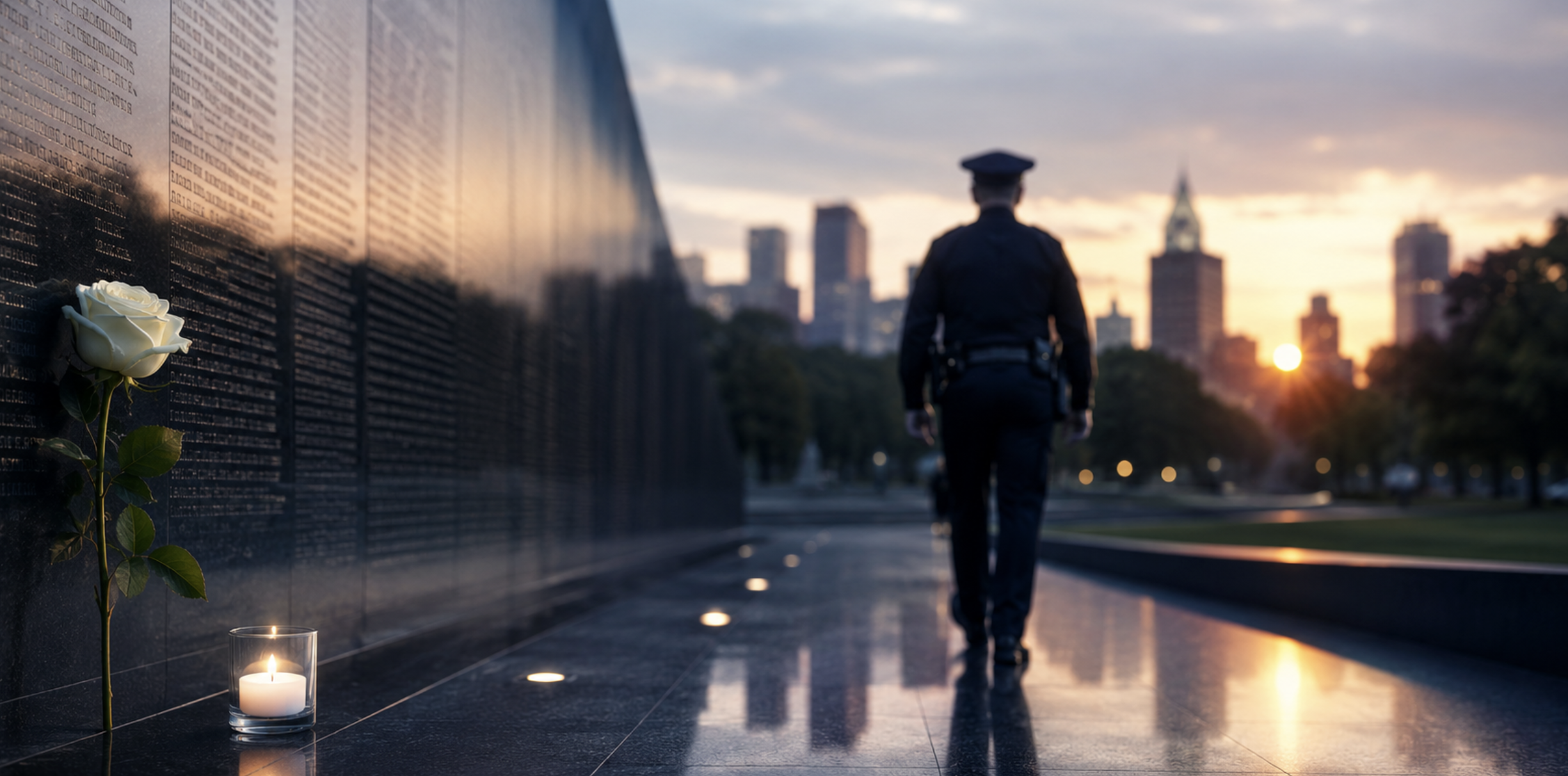
This year, at the 38th Annual Candlelight Vigil on the National Mall in Washington, D.C., 363 names were read aloud, etched into the walls of the National Law Enforcement Officers Memorial, and honored before thousands of survivors, officers, and supporters. It was a reminder that what's at stake extends far beyond any single ceremony, into the staffing rooms, the recruiting pipelines, and the hiring systems that determine whether America's law enforcement agencies can keep their ranks filled with the people this country depends on.
The Weight of the Memorial
The numbers on the wall tell a sobering story. More than 24,000 names of officers killed in the line of duty are now inscribed on the National Law Enforcement Officers Memorial in Washington, D.C., dating back to the first known law enforcement death in 1786. Each name represents a life of service cut short, a family forever changed, a community left to carry on without someone who chose to protect it.
Those 363 names include 109 confirmed killed in the line of duty in 2025, alongside 254 whose deaths were confirmed from prior years. That work of confirmation and remembrance is ongoing, and it reflects years of investment in honoring those who served. But even one officer lost is one too many. And the progress on fatalities makes the crisis in recruitment and retention all the more glaring, because the badge still needs to be filled.
A Profession Under Pressure
Honoring fallen officers is the heart of what National Police Week stands for. But the week also arrives each year against the backdrop of a profession being stretched thin. The officers still serving are doing more than they signed up for. Understaffed departments mean longer shifts, fewer resources, and less support, and that burden falls squarely on the people wearing the badge. More than half of active officers report experiencing burnout during their careers, and studies have found that 26 percent screen positive for a mental health condition such as anxiety, depression, or PTSD. With more than 70 percent of agencies reporting recruitment challenges compared to a few years ago, pressure on those already in uniform continues to grow. Honoring officers can't be confined to one week. It has to include an ongoing, honest conversation about building the systems that give them backup.
The Recruitment Pipeline Problem
The staffing crisis doesn't start at graduation. It starts at the application. And for many agencies, the process of moving a candidate from first inquiry to sworn officer is riddled with delays, gaps, and friction points that cost them qualified people before the work even begins.
Hiring processes at many agencies can take anywhere from four months to over a year, and the window in which a motivated candidate stays engaged is far shorter than most departments realize. A candidate who expresses interest on a Monday and hasn't heard back by the following week is already looking elsewhere. Private employers are faster, more responsive, and increasingly aggressive in competing for the same talent pool.
The result is a leak at every stage of the funnel. Agencies nationally are losing 50 to 70 percent of applicants before they ever reach the background investigation phase, not because the candidates were unqualified, but because the process let them slip away. Outdated hiring systems, manual workflows, and long silences between stages send a signal that no department intends to send: we're not sure we want you.
The agencies that are winning the recruitment battle right now share a common trait: they've invested in modernizing their hiring infrastructure, shortening timelines, and treating candidates like the valued future officers they are from the moment of first contact. Those that haven't are watching their pipelines drain faster than they can refill them.
From Memorial to Mission: What Honoring Officers Actually Requires
National Police Week was a week of remembrance. What it stands for has no expiration date. Commitment to the families of the fallen. Commitment to the officers who are still out there. And commitment to building the infrastructure that ensures law enforcement can keep attracting the next generation of people who are called to serve.
The challenge runs deeper than a thin applicant pool. The entire system, recruiting, hiring, onboarding, retention, and wellness, needs to function as a coherent whole if agencies are going to stabilize their ranks.
That means:
- Moving candidates through the hiring process with urgency and clear communication at every step
- Reducing the burden of administrative work that falls on already-stretched recruiting teams
- Building in touchpoints that keep candidates engaged and families informed during long hiring windows
- Using data to understand where candidates are dropping off and why
- Treating retention as a recruitment issue, because an officer who stays is one less vacancy to fill
These aren't aspirational goals. They are operational necessities for any agency that takes its public safety mission seriously.
Where Recruitment Technology Fits In
Part of honoring the officers who serve is making sure agencies have the tools to keep their ranks filled. Recruiting first responders requires managing background checks, fitness assessments, psychological evaluations, polygraphs, and multi-stage interviews that can span months, and many agencies are still trying to manage that complexity with outdated processes and disconnected systems. Candidates fall through the cracks, not because departments don't want them, but because the infrastructure wasn't built for this kind of work.
Respond Capture was designed specifically for first responder recruitment, carrying candidates from first inquiry through the hiring process and keeping the pipeline visible at every stage.
Police Week, and Every Week After
The Candlelight Vigil. The white chairs. The 363 names read aloud. Those images don't fade when the week ends. They are a charge.
The officers whose names are on that memorial gave everything they had. The least we can do for the ones still serving is build the systems, the pipelines, and the infrastructure that make their departments strong, every week of the year.
National Police Week was a time to honor the fallen, support the surviving, and recommit to the work of public safety. At Respond Capture, that commitment doesn't end when the flags come down. It's the reason we do what we do.