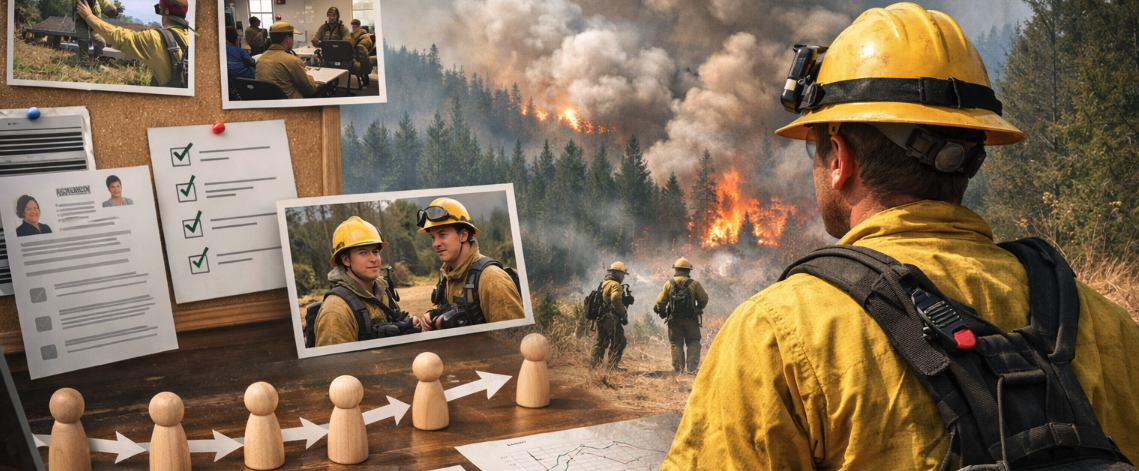
Wildland fire service recruiting can't be a panic button you press three months before deployment. It needs to be a year-round system that keeps qualified candidates warm, engaged, and ready to commit when positions open.
The good news? The creation of the U.S. Wildland Fire Service under the Department of Interior, with operations beginning in 2026, gives agencies a powerful new recruiting advantage. Combined with modern digital tools and smarter pipeline strategies, you can build a sustainable talent pool that doesn't evaporate every fall.
Why Seasonal Recruiting Keeps Failing You
Most wildland fire agencies treat recruiting like a seasonal crop. Plant some job ads in February, harvest applicants in March, then let the field go fallow until next year.
The problem is your candidates don't disappear when fire season ends. They take jobs with municipal fire departments. They join private wildland contractors. They move into construction or park services or any of the dozens of other industries competing for the same physical, outdoorsy workforce you need.
By the time you post your jobs, you're not competing with other wildland agencies. You're competing with every employer who was smart enough to stay in touch during the off-season.
Traditional seasonal recruiting also ignores a critical fact: your best candidates are people who already know the work. Former seasonals who left for better pay or career clarity. Municipal wildland crews considering a transition to federal positions. Veterans with outdoor training looking for mission-driven work.
These aren't cold leads who need to be sold on the lifestyle. They're warm prospects who need a reason to choose you over the competition.
The USWFS Advantage: A New Recruiting Story
The newly established U.S. Wildland Fire Service represents the biggest structural change to federal wildland firefighting in decades. For recruiters, it's a game-changer.
Starting in 2026, the USWFS operates as a centralized service with dedicated branding, a new pay classification system (the "GW" scale), and clear career progression from entry-level positions through incident management teams. The federal workforce now includes approximately 17,000 wildland firefighters, with USFS maintaining around 11,364 personnel and DOI planning roughly 5,700 by year-end.
This gives you a recruiting story that municipal and private employers can't match:
- Federal retirement benefits that vest over a full career
- Guaranteed training pathways with certifications recognized across agencies
- Geographic mobility across hotshot crews, helitack teams, dozer operations, and aviation roles
- Transparent career ladders from apprentice firefighter to engine boss to division supervisor
Previous federal wildland positions often felt like dead-end seasonal gigs with confusing pay structures and no clear path forward. The USWFS changes that narrative. Now you can recruit with a legitimate career pitch, not just a summer job offer.
Make sure every job posting, landing page, and recruiting conversation emphasizes these advantages. Create simple explainer graphics showing the GW pay tables for your locality, including realistic overtime examples from last season. Candidates need to visualize their earning potential, not decode federal pay scales on their own.
Building a Year-Round Pipeline (Not a March Scramble)
Effective wildland fire service recruiting requires you to think like a subscription service, not a one-time sale. You're building relationships that span months, keeping candidates engaged until the moment they're ready to commit.
Target High-Probability Pools
Your most efficient recruiting efforts focus on candidates already orbiting the wildland fire world:
Former seasonals who worked for USFS, DOI, or state agencies are your warmest leads. They understand the work, passed the physical requirements, and left for fixable reasons (usually pay, career clarity, or year-round employment). Create a simple referral program with micro-bonuses for completing pack tests or enrolling in required academies.
Municipal wildland programs employ thousands of firefighters who split time between structure protection and wildland response. Many are considering transitions to federal positions but don't know how their experience translates. Publish clear guides showing how municipal certifications map to USWFS requirements and create accelerated pathways for lateral transfers.
Veteran communities bring outdoor skills, physical fitness, and mission-driven mindsets. Partner with transition assistance programs at nearby bases and create veteran-specific recruiting materials that highlight how military experience accelerates career progression.
State forester networks are preparing personnel for 2026 USWFS transitions. Coordinate joint recruiting events and information sessions to capture candidates already familiar with wildland fire operations.
Deploy a 90-Day Pre-Season Campaign
Three months before you need boots on the ground, launch a structured recruitment push:
Weeks 1-2: Update all digital presence. Job ads, career landing pages, and social media profiles should include clear USWFS explainers. Post compensation grids using locality-specific GW pay tables. Publish a simple "Offer Calculator" that helps candidates understand their take-home pay including overtime.
Weeks 2-3: Build a dedicated lead capture funnel. Create an "I want USWFS updates" form that triggers a six-message email or SMS sequence covering mission, pay, training, mobility options, schedule realities, and application steps. Each message should answer one major question candidates actually have.
Weeks 3-4: Launch SMS campaigns targeting lateral recruits. Former seasonals and municipal wildland professionals respond well to direct, personal outreach: "New USWFS. New pay scale. Keep your experience, level up faster." Offer accelerated screening days where candidates can complete pack tests, verify S-130/S-190 certifications, and receive conditional offers on the spot.
Weeks 6-12: Create authentic visual content. Ninety-second "day-in-the-life" videos optimized for Instagram and TikTok can boost recruitment by up to 20%. Film real crew members explaining what they actually do, not polished corporate content. Post one-page career ladder guides with QR codes at trailheads, outdoor gear shops, and climbing gyms where your target candidates already spend time.
Host "Wildland Wednesdays" as open-house Q&A events covering gear requirements, fitness expectations, and deployment realities. Partner with state forestry and tribal fire programs for joint information nights that expand your reach.
Modernize Your Digital Recruiting
Traditional job boards aren't enough anymore. Millennials and Gen Z candidates (your primary applicant pool) expect mobile-optimized applications, instant communication, and authentic content that showcases purpose and community impact.
Use SMS, not just email. Text message open rates exceed 98%, compared to roughly 20% for recruiting emails. When a candidate submits an application, text them within 15 minutes with next steps. Use automated SMS reminders at T-48 hours, T-24 hours, and T-2 hours before scheduled pack tests or interviews.
Create authentic social content. Candidates want to see real firefighters doing real work, not stock photos of people in pristine gear. Short vertical videos showing crew camaraderie, challenging work, and post-shift debriefs outperform polished recruitment ads every time.
Map your recruiting gaps. Use GIS toolkits to identify underserved geographic areas and demographic groups. Overlay this data with your current applicant sources to find communities you're not reaching. Target paid social ads and local partnerships in these specific areas.
Implement structured onboarding with mentorship. Pair new hires with experienced firefighters from day one. Structured mentorship programs with mental health resources reduce early turnover and create advocates who recruit their own networks.
Track What Actually Matters
You can't improve what you don't measure. Focus on metrics that predict success:
Lead-to-applicant conversion rate: Aim for at least 20% improvement year-over-year. Track which lead sources (social ads, referrals, job boards) produce the highest-quality applicants who actually complete the process.
Time to conditional offer: Target under 14 days from application to conditional offer. Pre-book pack tests and medical screenings with automated reminders to keep candidates moving through your pipeline without delays.
Seasonal return rate: Measure how many of your current-season firefighters return the following year. A healthy return rate exceeds 65%. Start re-engagement outreach the week personnel demobilize, not the following spring.
Lateral transfer success: Track how many experienced firefighters from municipal or other agencies you successfully recruit. Set a goal of 10% annual growth in lateral additions by emphasizing clear pay advantages and career progression.
Address the Real Obstacles
Candidates considering wildland fire positions have legitimate concerns. Address them directly:
Structural uncertainty around the 2026 USWFS transition creates hesitation. Emphasize continuity of mission, guaranteed training windows, and firm start dates. Share updates from Interior Department communications and provide clear timelines.
Compensation confusion kills interest fast. Federal pay scales intimidate candidates unfamiliar with GS or GW classifications. Use plain-English explanations with locality-specific examples. Show total annual earnings including overtime and hazard pay, not just base rates.
Competition from other employers is real. Municipal fire departments offer year-round employment. Private wildland contractors sometimes pay more per hour. Combat this by spotlighting what only federal positions provide: career mobility across specialized teams (hotshots, helitack, aviation), federal retirement benefits, and mission-driven culture.
Start Building Your Pipeline Today
Wildland fire service recruiting isn't getting easier. Competition for physically fit, outdoor-oriented workers intensifies every year. Fire seasons start earlier and run longer. The work is hard, the conditions are demanding, and candidates have options.
But agencies that build year-round recruiting systems, leverage the USWFS career story, and communicate consistently with modern tools will fill their crews before competitors even post their jobs.
The 2026 fire season is closer than you think. The question is whether you'll be scrambling to fill positions in March or confidently onboarding candidates who've been warming in your pipeline since last fall.
If you want to see how Respond Capture helps public safety agencies build automated recruiting pipelines that work year-round, reach out to our team. We'll show you how SMS automation, career landing pages, and applicant tracking systems turn seasonal chaos into predictable hiring success.