
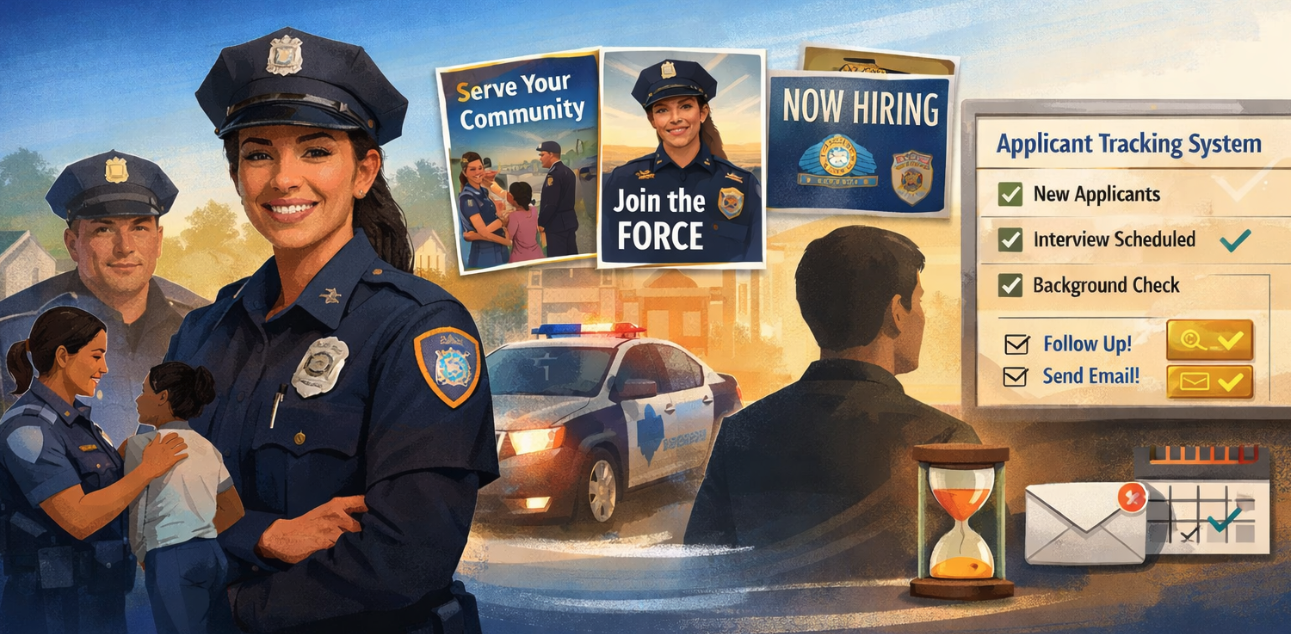
Police departments across the country are wrestling with the same problem: not enough applicants, and not enough diversity in the applicant pool. Women make up half the U.S. population but only about 14% of sworn officers. That gap isn't because women can't do the job—research shows they excel at it, particularly in building community trust and responding to sensitive crimes. The gap exists, at least in part, because of how departments communicate what the job actually is.
New research from RTI International offers some concrete guidance on what works. The findings might surprise you.
The Message That Actually Resonates
Researchers tested different recruitment approaches with college students and general population adults, comparing ads focused on three themes: public service, career challenges, and job benefits. The results were clear. More than half of participants found the public service message most motivating. The challenge-focused message? It came in last at 18%.
This held true across genders. Both men and women responded more positively to messaging about helping communities and serving others than to ads emphasizing the excitement or difficulty of police work.
For women specifically, there was another finding worth noting. When shown recruitment videos featuring women officers and highlighting the value women bring to policing, women participants reported higher motivation, saw the job as more relevant to them, and developed more positive perceptions of the agency. Targeted messaging works.
The study also found that inclusive language in job descriptions improved how people perceived an agency's fairness—for both men and women. Small wording changes can shift whether a potential applicant sees your department as a place where they could belong.
The Part Nobody Talks About
Here's the thing about great recruitment messaging: it only matters if you can actually capture and retain the interest it generates.
Picture this scenario. Someone sees your service-focused recruitment video, feels genuinely motivated, and decides to apply. They fill out an initial form on your website. Then... silence. Maybe they get an automated email a week later. Maybe they don't hear anything for a month. By the time someone from the department reaches out, they've already accepted a job elsewhere or simply lost interest.
This is where the investment in better messaging falls apart. Departments spend time and money crafting the right recruitment materials, but the systems for managing applicants once they express interest often lag behind. Spreadsheets get unwieldy. Emails fall through cracks. Promising candidates disappear without anyone noticing until it's too late.
An applicant tracking system like RespondCapture exists to solve exactly this problem. When someone responds to your recruitment campaign, their information gets captured immediately and organized in one place. You can see where every applicant stands in the process, set up timely follow-ups, and ensure nobody slips away simply because of administrative delay.
Think about the math. If better messaging increases your qualified applicant pool by 20%, but you're losing 30% of applicants to slow or disorganized follow-up, you're running in place. The recruitment funnel has two parts: getting people interested, and keeping them engaged through the process. Neglecting either one undermines the other.
Putting It Together
The research offers a clear playbook for the messaging side. Lead with public service and community impact. Create targeted content for specific audiences you want to reach. Use inclusive language in your job descriptions. These aren't just nice ideas—they're experimentally validated approaches that move the needle.
But recruitment is a system, not a single touchpoint. The departments that will actually close their staffing gaps are the ones that pair compelling messaging with responsive, organized applicant management. They're the ones who understand that earning someone's initial interest is just the first step.
Your next great officer might be watching a recruitment video right now, feeling that spark of recognition that this could be their calling. What happens next is up to you.